
Published Sep 7, 2026
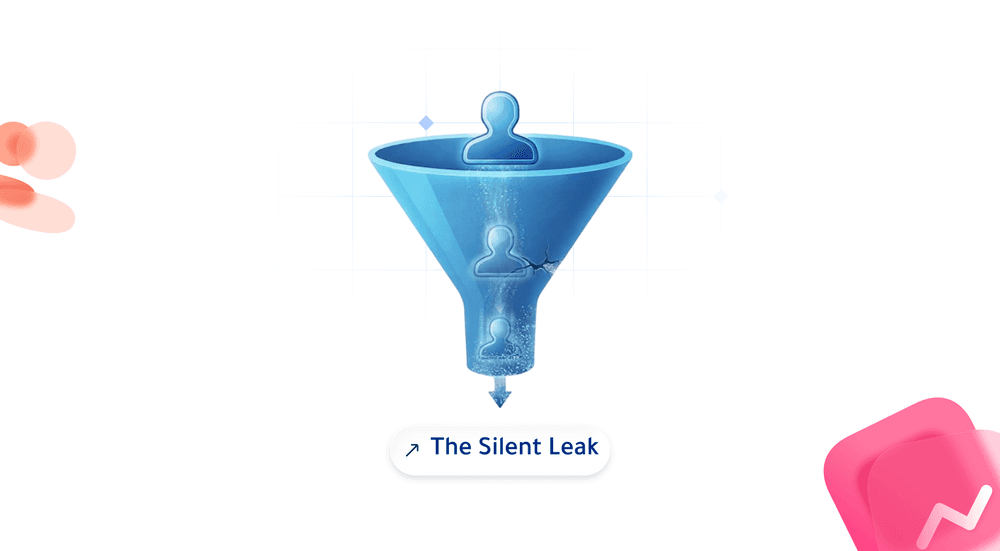
Picture this: a prospect calls you, asks detailed questions, requests a formal quote, maybe even tells you "this is exactly what we need." You send the quote. You feel good about it — this one's basically closed. Then... nothing. A week passes. You mean to follow up, but the week gets busy. Two weeks pass. By the time you finally reach out again, either they've gone with a competitor who followed up faster, or they've simply moved on to something else entirely — not because they didn't want what you were selling, but because nobody reminded them it was still on the table.
This didn't happen because your product was wrong for them, or your price was too high, or they weren't a real prospect. It happened because a genuinely warm, engaged lead — someone who had already done the hard part of getting interested — went cold in complete silence, and nobody on your side noticed until it was too late to matter.
What Is a CRM Follow-Up System?
A CRM follow-up system is a defined, written process for staying in contact with every prospect who has shown real interest — had a call, requested a quote, asked for a proposal — from the moment they go quiet until they either become a customer or are officially marked as no longer active. It answers three questions for every single prospect in your pipeline, at any given moment: when were they last contacted, what happens next, and by when.
Think of it like a hospital's patient monitoring system: nobody in a hospital relies on staff to simply remember which patients need a check-up and when — every patient has a chart, a schedule, and a defined next action, so nothing depends on any one person's memory on any given day. A CRM follow-up system does the same thing for your warm prospects: it turns "I should probably check in with them at some point" into a scheduled, visible, unmissable next action.
It's worth noting this doesn't have to mean "CRM software" specifically — CRM here refers to the discipline of managing the relationship, not necessarily a piece of software. A shared spreadsheet, tracked with real discipline, is a CRM follow-up system. An expensive software platform nobody actually updates is not.
Why "I'll Follow Up When I Get To It" Doesn't Work
Most businesses do have a version of follow-up. The problem is rarely a complete absence of effort — it's that the effort follows one of three familiar, predictable patterns, all of which quietly bleed deals you had already, functionally, won.
The "I'll Get To It" Trap
Follow-up gets treated as a leftover task — something you do once the "real work" is done, whenever there happens to be a spare moment. The problem is that a spare moment competes with everything else demanding your attention on a given day, and it reliably loses to anything more urgent — a new lead, a client emergency, an invoice that's overdue. Follow-up isn't urgent on any single day, so it keeps losing that daily competition, day after day, until three weeks have passed without anyone noticing that a genuinely interested prospect hasn't heard a word from you.
The "One-And-Done" Trap
A prospect gets one message or one call, and if there's no reply, the business quietly assumes the answer is no. In reality, silence after a single attempt rarely means "not interested" — it usually means "busy," "saw it but forgot to reply," or "still deciding, and your message wasn't urgent enough to interrupt whatever they were doing." One attempt tells you almost nothing. Treating it as a final answer means walking away from prospects who were still very much in play, simply because you stopped before they had a real chance to respond.
The Memory-As-System Trap
This is the deepest version of the problem: follow-up depends entirely on someone's memory rather than anything written down. It works, sort of, when there are five prospects in play. It quietly and completely breaks down the moment there are fifteen, because no memory — however good — reliably tracks fifteen different people, at fifteen different stages, needing fifteen different next actions, on fifteen different timelines. The business owner isn't lazy or careless in this scenario; the system itself was never built to scale past a small number of people held in someone's head.
Signs You Have a Silent Leak
Before fixing this, it's worth confirming whether it's actually costing you anything. Here are six common signs:
- You can't say, right now, off the top of your head, how many warm prospects are currently sitting in your pipeline waiting on a reply from you.
- At least one genuinely interested prospect hasn't heard from you in two weeks or more — and you only just realized it while reading this.
- You've said, out loud or to yourself, "I think I forgot to follow up with them" at least once in the last month.
- There's no fixed number of follow-up attempts your business commits to before considering a prospect officially gone — it just fades out, undefined, whenever everyone stops thinking about it.
- Follow-up depends entirely on memory or a mental "I'll get to it" list — nothing about it is written down anywhere another person could check.
- A prospect you'd quietly written off months ago reached out on their own, revealing they were still interested the entire time — meaning the deal was never actually dead, you had simply stopped being the one keeping it alive.
If two or more of these sound familiar, you very likely have a silent leak in your pipeline right now — real, winnable deals quietly going cold, not because the prospect said no, but because nobody kept the conversation moving.
A Hypothetical Example: The Cost of Silence
Imagine a business running professional training courses — accounting certifications, for example. A prospect calls, asks detailed questions about the course content and schedule, and requests a formal quote by the end of the call. The quote goes out that same day. Then the business owner, busy preparing for the next cohort's launch, moves on to other things. No second message goes out. Three weeks later, the enrollment deadline for that cohort passes, and the prospect never signs up — not because the price was wrong or the course didn't fit their needs, but because nobody reminded them the offer was even still open, or answered the two or three small hesitations that were quietly stopping them from committing.
Now imagine the same business, but with a simple follow-up cadence in place: a short check-in message the day after the quote goes out, a value-focused touch a few days later (sharing, say, a short success story from a past student, not just "checking in"), and one final direct message about a week before the enrollment deadline, clearly noting that spots are limited. None of this requires expensive software or a dedicated salesperson — it requires four scheduled touches and a five-minute weekly review of who's due for one. The prospects who were always going to say no will still say no. But the ones who were genuinely interested and just needed one more nudge, one more piece of information, or one more reminder that the deadline was real — those are the deals a simple, consistent follow-up cadence is built to catch.
The 5 Components of a Real Follow-Up System
A defined touchpoint cadence
Rather than "I'll reach out again at some point," a real system defines exactly when each follow-up happens relative to the last contact: for example, day 1 (a short check-in the day after initial contact or quote), day 3 (a value-add touch), day 7 (a direct, clear check on where they stand), and day 14 (a final, respectful close-the-loop message). The spacing matters as much as the fact of following up at all — early touches are close together because interest is at its hottest right after first contact, and later touches spread out because repeated contact within a short window starts to feel like pressure rather than service. This exact schedule isn't a fixed law — a longer sales cycle (like a home renovation or a B2B contract) might stretch it to day 1 / day 5 / day 12 / day 25 — but the principle of defined, non-negotiable intervals is what matters, not the specific numbers.
More than one channel
A phone call that isn't picked up, a WhatsApp message that gets buried under twenty other chats, and an email that lands in a folder nobody checks all fail for different reasons — so relying on only one of them means every follow-up attempt inherits that one channel's specific blind spot. A prospect who ignores calls from unknown numbers might respond instantly to a WhatsApp message. Someone who's bad about messaging apps might actually read email. Rotating channels across the cadence — call on day 1, message on day 3, email on day 7 — meaningfully increases the odds that at least one attempt actually reaches the person, rather than technically "being sent" without ever being seen.
A simple written log: last contact + next action
For every prospect currently in the "warm, not yet decided" category, one line should exist somewhere visible — a spreadsheet is genuinely enough — recording who they are, how they were last contacted and when, and exactly what the next action is and when it's due. This single habit is what actually replaces memory as the system. It doesn't need columns for everything imaginable; three or four are usually enough: contact info, last contact date and method, next action and due date, and current status (warm, hot, cold, won, or dead). The version of this that fails is the one that only gets updated when there's spare time. The version that works gets updated the moment any contact happens, as part of that contact — not as a separate task to remember later.
Varying what each touch actually says
A cadence with four "just checking in" messages back to back is barely better than no cadence at all — it reads as a reminder that you exist, not as a reason to actually respond. Each touch should ideally carry something slightly different: the first might simply confirm receipt and next steps, the second might share something genuinely useful (a relevant tip, a short case example, an answer to a question they hadn't asked yet but probably had), the third might directly and politely ask where things stand, and the last might introduce a real, honest reason to decide now — a deadline, limited availability, or simply an honest closing question like "should I keep this open, or would it help to talk through what's holding things up?"
A clear, written rule for when a lead is officially dead
This is the component businesses skip most often, and it matters just as much as the other four. Without a defined limit, one of two things happens: either you give up on genuinely interested people after a single unanswered message, or your pipeline slowly fills with prospects who will never actually buy, making your numbers look better than reality and quietly wasting attention that should go to prospects who are still actually in play. A reasonable, adjustable default: after four attempts across roughly three weeks with zero response, a prospect moves from "warm" to "dormant" — not deleted, just set aside, with a single light re-engagement touch scheduled a few months later. This closes the loop honestly without pretending the door is permanently shut.
Why This Matters Even More for SMEs in Algeria
In my experience working with SMEs here in Algeria, follow-up is often the very first thing that gets dropped when things get busy — not because owners don't understand its value, but because in a small team, or a team of one, the person responsible for follow-up is usually also the person handling production, delivery, supplier calls, and everything else that feels more urgent in the moment. Follow-up rarely feels urgent on any single day, which is exactly why it's the task most likely to quietly disappear.
I've also noticed, in my own work with clients here, that WhatsApp tends to be the default channel prospects expect a response through — which is convenient in some ways, since it's a channel almost everyone already checks constantly, but it also means a follow-up message can get buried in the same thread as personal chats within hours, unless there's a deliberate habit of checking back on it. This is a pattern I've observed working with businesses in this market, not a documented behavioral statistic — but it's worth accounting for when you design your own cadence: if WhatsApp is genuinely where your prospects are most responsive, build your channel rotation around that reality rather than a generic playbook.
None of this changes the underlying system — the same cadence, multi-channel logic, written log, and dead-lead rule apply regardless of market. What changes is how much more likely the leak is to go unnoticed when there's no formal marketing or sales department to catch it — just one person, wearing every hat, for whom a forgotten follow-up doesn't show up as a line item anywhere. It just shows up, months later, as a slower month with no clear explanation.
5 Steps to Close This Leak This Week
- List every prospect from the last 30 days who showed real interest but hasn't said a clear yes or no — this is your current "warm bucket," and most business owners are surprised by how long the list actually is once they write it down.
- Define your cadence in writing — pick your own version of day 1 / day 3 / day 7 / day 14, matched to how long your typical sales decision actually takes, and assign a channel to each step.
- Create one shared log with four columns: contact info, last contact (date + method), next action (+ due date), and status — a spreadsheet is genuinely enough to start.
- Set your dead-lead rule in writing — a specific number of attempts over a specific window, after which a prospect moves to dormant rather than being chased indefinitely or forgotten silently.
- Block 15 minutes at a fixed time, daily or every other day, to run through whoever's follow-up is due that day according to the log — not to think about it, just to execute what's already scheduled.
Common Mistakes to Avoid
- Counting a single sent message as "we followed up," when a real follow-up sequence needs several attempts across time to mean anything.
- Sending the exact same "just checking in" message every single time, which trains prospects to ignore it after the second attempt.
- Relying on one channel exclusively, especially phone calls alone, when a meaningful share of prospects simply don't answer calls from numbers they don't recognize.
- Never closing out genuinely dead leads, which leaves your pipeline cluttered with prospects who were never going to buy, making it harder to see who actually needs attention.
- Following up so frequently or aggressively that it starts to feel like pressure instead of service — there's a real difference between a helpful nudge and a message that makes someone regret ever inquiring.
- Treating follow-up as something that only matters for your biggest, highest-value prospects, while smaller ones quietly pile up and go cold in the background, adding up to real lost revenue over a year.
Frequently Asked Questions
What's the difference between the marketing-sales handoff gap and this silent leak?
The handoff gap (covered in the previous article) is about the moment a lead first arrives — how fast it's picked up, and by whom. The silent leak happens after that: a prospect has already been contacted, has shown real interest, and is now somewhere in the middle of deciding — this is about what happens, or doesn't happen, during that entire in-between stretch.
How many follow-up attempts are actually enough before I let a lead go?
There's no universal number, but somewhere around four attempts spread across two to three weeks is a reasonable, defendable default for most short-to-medium sales cycles. What matters more than the exact number is that you commit to one in writing, so the decision to stop is deliberate rather than something that just quietly happens.
Won't following up this often feel pushy to the prospect?
Not if each touch adds something and the intervals give reasonable space between attempts. What actually feels pushy is repetition without variation — the same message, back to back, with no new information. A cadence that spaces attempts out and varies what each one says reads as attentive service, not pressure.
Do I need CRM software, or is a simple spreadsheet enough?
A spreadsheet is genuinely enough to start, and for many small businesses, it's enough permanently. What matters is not the tool but the discipline of updating it the moment contact happens. Dedicated CRM software becomes useful once the volume of prospects makes a spreadsheet genuinely hard to manage — not before.
What should I do with a prospect who explicitly says "maybe later," instead of just going quiet?
Treat it as real information, not silence. Ask directly what "later" means to them — a rough timeframe is usually enough — and schedule your next touch around that specific window rather than your default cadence. An explicit "not now" with a stated reason deserves a different, more patient follow-up plan than a prospect who's simply gone quiet.
How do I know if this silent leak is actually costing me real money right now?
Pull up your last 15 to 20 leads and check two things: how many went more than a week without a second contact from you, and how many you genuinely don't know the current status of. If either number feels uncomfortably high, the leak is very likely real, and it's very likely costing you deals you would otherwise have closed.
Conclusion
Deals rarely die with a clear "no." Most of the time, they just fade — a prospect who was genuinely interested a few weeks ago quietly stops replying, not because they decided against you, but because nobody kept the conversation alive on your side. A defined touchpoint cadence, more than one channel, a written log of last contact and next action, and a clear rule for when a lead is officially dead won't manufacture deals that were never going to close — but they will stop you from quietly losing the ones you had, functionally, already won.
Closing this leak doesn't require an expensive CRM platform or a bigger sales team. It requires a system simple enough that you'll actually follow it — which is exactly why the four components above are built to run on a spreadsheet and fifteen minutes a day, not a six-month software rollout.
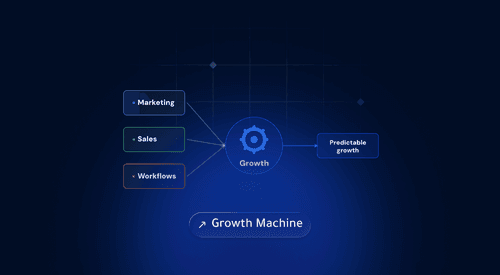
But once that leak is closed, a harder question follows close behind: can you actually see what's happening across your whole growth system right now — which channels are bringing in the leads that turn into these warm prospects, where deals are quietly stalling, and what's genuinely working versus what only looks like it's working? That's no longer a follow-up problem. That's a visibility problem, and it's the next pillar of the Growth Machine. The next article covers exactly that: what your dashboards aren't telling you about your business — and why the numbers you're currently looking at might already be quietly misleading you.
If you'd like a direct, honest look at how follow-up actually works in your business today — not how you assume it works — I'm here to help.